
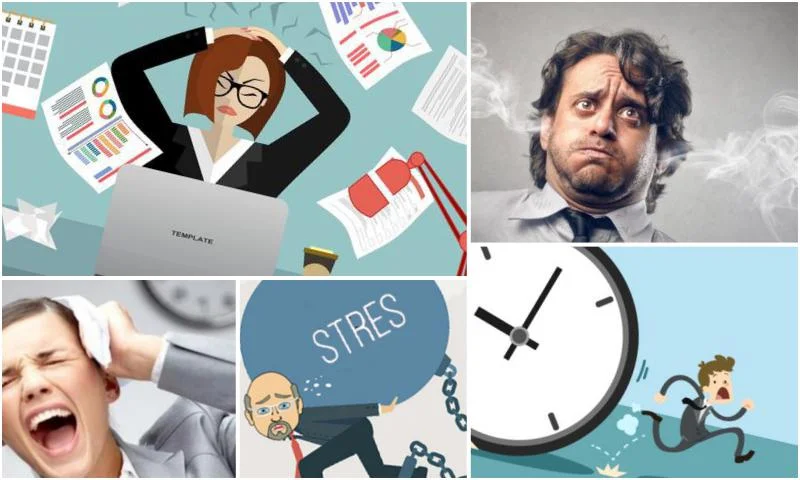
What is Stress and How are Events Perceived as “Stressful”?
What is Stress?
People’s reactions to stressful events vary. While a stressful event may lead to severe psychological or physical problems in some individuals, the same stressful event may pose no problem for others. Stress has become a particularly popular topic today. Especially in the media, stress-related nervous breakdowns are often cited as the cause of unusual behaviors or illnesses. So, what is stress? Is it beneficial or harmful? Stress is the encountering of events that people perceive as a threat to their psychological or physiological health. These events are generally seen as the cause of stress, and people’s reactions to them are stress reactions. The stress reaction is sometimes adaptive and sometimes maladaptive. For example, our stress reaction is adaptive when it is possible to fight or flee; for instance, a student must experience a certain level of stress when they have an exam in order to study for it, or a man who sees a car rapidly approaching him must experience stress and flee the scene. In this way, stress is adaptive and necessary. However, if we can no longer control this stress reaction, or if we maintain it chronically, it becomes maladaptive.
Characteristics of Stressful Events
Many events cause stress.
• Major changes such as natural disasters, wars, nuclear accidents
• Personal events such as moving, changing jobs, getting married, losing a loved one, contracting a serious illness
• Daily hassles such as being stuck in traffic, losing a wallet, failing a class
• Traumatic events such as being trapped under rubble in an earthquake, floods, serious traffic accidents, witnessing a murder, being subjected to rape, are the main stressful events.
How are Events Perceived as “Stress”?
Events are perceived as “stress” based on their:
• Controllability
• Predictability
• Changes they create in life conditions
• Creation of internal conflict
What Does Controllability of Events Mean?
Can I initiate an event? If an event begins, can I stop it? Our answers to these questions determine the controllability of the event and affect how stressful we perceive the event to be. If controllability is low, stress is high. For example, events that are beyond our control, such as a loved one falling ill, a friend you are having trouble with not accepting your apology, or not being able to reach your destination because the bus company sold too many tickets, are perceived as causes of stress. What Does Predictability of Events Mean?
If we can predict whether an event will occur and, if it does, when it will occur, our likelihood of perceiving the event as stressful decreases. If we can predict that a stressful event will occur, even if we cannot control the event, the intensity of the stress we experience decreases. This is because a person who can predict can take precautions. For example, a worker who can anticipate when their boss will be angry tries to stay out of the way that day, or a person who predicts a storm is coming can close their windows. Apart from this, people in professions such as emergency medicine or firefighting experience very stressful days because they are exposed to unpredictable events.
Internal Conflicts Also Cause Stress
What we call internal conflict are unresolved problems that can be conscious or unconscious. Conflict arises when we cannot choose between two events. For example, in a difficult situation, we might want someone to help us and solve our problem; however, when we receive help from someone else, we might think we cannot stand on our own two feet and consider giving up. Being caught between these two thoughts causes internal conflict. We may want to be close to a person and open ourselves up to them, but we may step back thinking that we might get hurt or rejected as a result. Throughout our lives, we have to compete with people and help them. These two situations cause conflict.





