
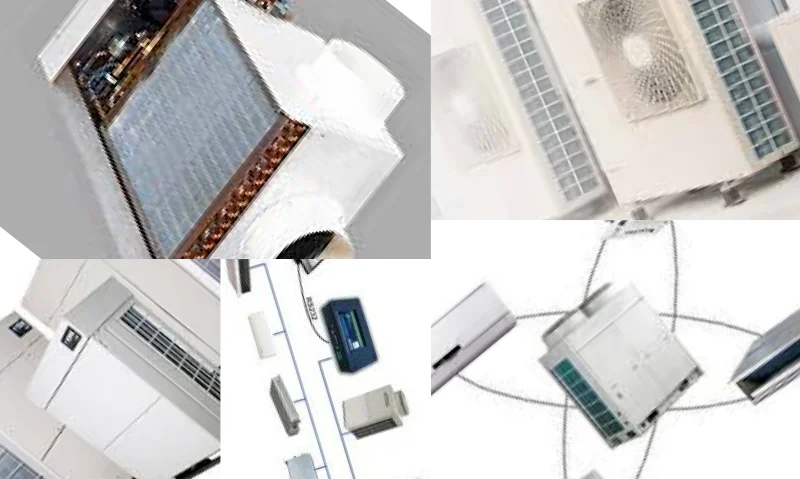
VRV Air Conditioning
Advantages of VRV Air Conditioning
VRV is formed from the initial letters of Variable Refrigerant Volume. It can be translated into Turkish as variable refrigerant flow air conditioning. Both VRV and VRF operate with the same system but are used by different brands. In VRF and VRV systems, up to 64 indoor units can be connected to one outdoor unit. Detailed information can be obtained from the address. VRF and VRV systems are equipped with advanced control and current units, thus providing advanced comfort. When VRV air conditioners operate, the gas and liquid units exiting the outdoor unit circulate through the system and return to the outdoor unit. This provides heating or cooling.
How Many Types of VRV Air Conditioning Systems Are There?
VRV air conditioners have many advantages. The most prominent of these is energy saving. For the VRF system, known as central air conditioning systems, indoor temperature can be precisely controlled within (+/-) 0.5 degrees. The temperature and pressure sensors inside VRV air conditioners determine the temperature capacity of the environment without being affected by the distance of each indoor unit to the outdoor unit. Thus, it consumes only the required amount of energy and saves energy. VRV systems are divided into two types based on the cooling method of the outdoor unit condenser: air-cooled VRF systems and water-cooled VRF systems. Air-cooled VRF systems are the most commonly used VRV systems. In air-cooled systems for VRV, heat is transferred to the air by fans in the outdoor unit condenser. This provides cooling or heating. In water-cooled VRF systems, the heat is transferred to water from any source. The outdoor unit dimensions are small. In water-cooled models of VRF air conditioning systems, which do not require fans, the efficiency is quite high because the outdoor units do not need to come into contact with the air.





